Warmup Inbox vs. Mailwarm: head-to-head
The biggest differences come down to cost, control, monitoring, and the amount of support included.
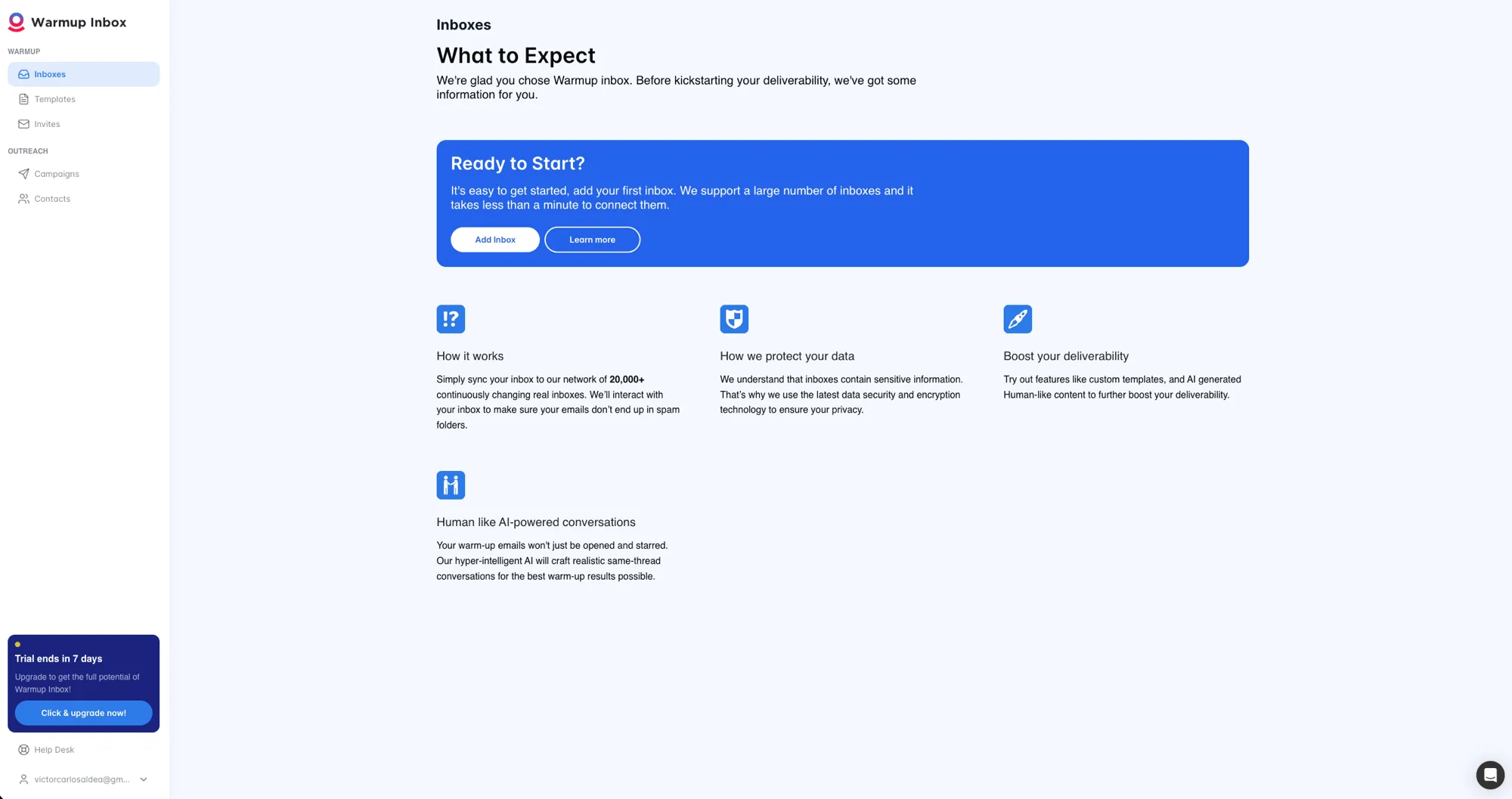
Pricing and trial
Mailwarm starts at $69 per month with annual billing or $79 with monthly billing, compared with $15 per mailbox per month annually or $19 monthly for Warmup Inbox. Warmup Inbox also offers volume discounts for each additional inbox and a 7-day free trial with no credit card required. Mailwarm does not offer a comparable free trial.
Winner: Warmup Inbox, on price, billing flexibility, and the ability to test before paying.

Network
Warmup Inbox has more than 30,000 active inboxes in its network, including customer inboxes and internally managed inboxes used exclusively for warming. Mailwarm advertises a larger network of more than 50,000 real, aged inboxes.
Warmup Inbox also tests every newly connected inbox before releasing it to the network. It sends test emails, checks that the inbox can receive and retain them, and only adds the inbox to the warmup network if those checks pass. Mailwarm doesn't publicly document an equivalent admission process.
Winner: Warmup Inbox, for its documented network quality checks. Mailwarm has the larger advertised network, but Warmup Inbox provides more transparency about how inboxes are admitted to its network.
Warmup controls
Warmup Inbox lets you set starting volume, daily increase, and maximum sends directly. Mailwarm uses progressive volume ramping, but its public materials don't specify whether those settings can be adjusted manually.
Winner: Warmup Inbox, for clearly documented control over how warmup volume increases.
Placement monitoring
Mailwarm offers 24/7 inbox-placement monitoring, tracking whether warmup emails land in the inbox or spam across individual mailboxes and SMTP providers.
Warmup Inbox also tracks inbox placement and spam rates in real time, alongside blacklist monitoring across 50+ blacklists with hourly rechecks. Alerts flag changes as they happen, and Warmup Inbox can adjust warmup activity in response.
Winner: Tie. Both provide ongoing deliverability monitoring. Warmup Inbox publishes more detail about its blacklist checks and automated alerts, while Mailwarm specifically positions its placement monitoring as continuous rather than periodic.
Customer support
Both products give paying customers access to support, but they take different approaches. Mailwarm bundles deliverability expert calls into every plan, from one call per month on Starter to on-demand calls on Scale.
Warmup Inbox includes customer support chat on Basic, priority support on Pro, and premium support plus a technical setup check on Max. You don't get the same scheduled consulting calls, but you also don't have to move to Mailwarm's considerably more expensive plans to get support when you need it.
Winner: Warmup Inbox, for giving every plan access to customer support at a much lower price. Mailwarm is the better choice if scheduled one-to-one calls with a deliverability expert are specifically what you're looking for.
Product scope
Warmup Inbox includes campaign sending alongside email warmup, so you can warm mailboxes and run outreach from the same product. Mailwarm is focused on warmup and deliverability monitoring, so you'll need a separate sending tool to actually run campaigns.
That makes Warmup Inbox the more complete option if you want to manage both from one place, while Mailwarm makes more sense as a dedicated warmup layer alongside an existing outreach stack.
Winner: Warmup Inbox, for anyone who wants warmup and campaign sending in one product rather than paying for and managing separate tools.